Let’s Explore
The Great Wildebeest Migration
The Great Wildebeest Migration
The Great Wildebeest Migration is one of the most spectacular wildlife events in the world, attracting visitors to Tanzania’s Serengeti National Park every year. It involves more than a million wildebeest, accompanied by zebras and gazelles, moving across the Serengeti ecosystem in search of fresh grass and water. This natural journey offers incredible opportunities to witness large herds, predator encounters, and dramatic river crossings.
The migration follows seasonal rainfall patterns rather than a fixed route or schedule. Depending on the time of year, visitors can experience different stages of this remarkable journey, making a Tanzania safari an unforgettable wildlife adventure.
What Is the Great Wildebeest Migration?
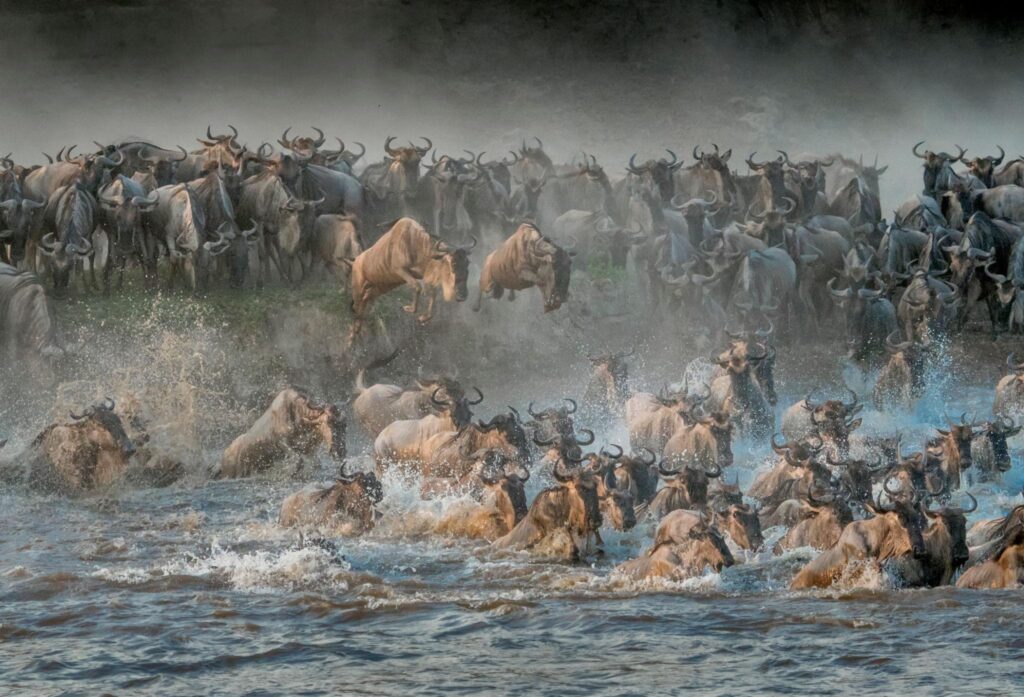
The Great Wildebeest Migration is the annual movement of vast herds of wildebeest across the Serengeti in Tanzania and the Maasai Mara in Kenya. Driven by the search for nutritious grass and reliable water sources, the animals travel hundreds of kilometres throughout the year.
Wildebeest are the main species involved, but large numbers of zebras and gazelles travel alongside them. Their movement supports the wider ecosystem, providing food for predators such as lions, leopards, cheetahs, hyenas, and crocodiles.
The migration is not a single event that happens on one particular day. It is a continuous cycle of movement, calving, grazing, and survival, offering different wildlife experiences throughout the year.
Where Does the Great Migration Take Place?
The migration takes place mainly in the Serengeti ecosystem of northern Tanzania before extending into Kenya’s Maasai Mara. Tanzania hosts much of this remarkable journey, including the southern plains where wildebeest gather to give birth and the northern Serengeti, where herds often cross the Mara River.
Key areas for witnessing the migration include:
Southern Serengeti and Ndutu: Famous for the calving season and large concentrations of newborn wildebeest.
Central Serengeti: Offers wildlife viewing throughout the year, with migration herds passing through at different times.
Western Serengeti and the Grumeti area: Known for seasonal herd movements and river crossings.
Northern Serengeti: A major destination for witnessing the herds near the Mara River, especially during the middle and later parts of the year.
Great Wildebeest Migration Calendar
The timing of the migration varies with rainfall, but the following guide outlines the typical seasonal pattern.
January to March – Calving Season
The herds gather across the southern Serengeti and Ndutu plains, where nutritious grass supports pregnant wildebeest and newborn calves. February is often the peak calving period, creating excellent opportunities to observe young animals and the predators that hunt them.
April to June – Movement Towards the West
As the southern plains become drier, the herds begin moving north and west through the Serengeti. Large groups can be seen travelling across open grasslands, with some reaching the western corridor and the Grumeti River area.
July to October – Northern Serengeti and River Crossings
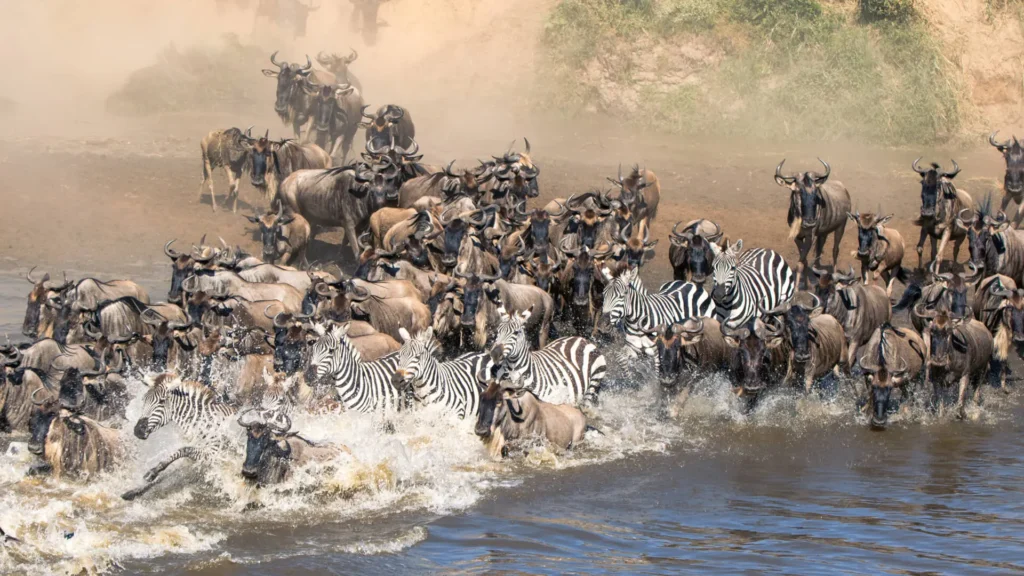
Many herds move into the northern Serengeti, where they may attempt to cross the Mara River. These crossings can involve strong currents and crocodiles, making them among the most dramatic moments of the migration. Crossings are unpredictable and cannot be guaranteed on a particular day.
November to December – Return Towards the South
With the short rains, the herds generally begin moving back towards the eastern and southern Serengeti plains. Fresh grass attracts the animals, preparing them for the next calving season and another cycle of migration.
Why Is the Great Wildebeest Migration So Special?
The Great Migration is much more than a journey across the African plains. It is a remarkable natural cycle that demonstrates the relationship between wildlife, seasonal rainfall, and survival.
Massive wildlife herds: Witness enormous groups of wildebeest and zebras moving together across the plains.
Dramatic river crossings: Observe herds gathering at riverbanks before attempting dangerous crossings.
Predator encounters: Look for lions, cheetahs, leopards, hyenas, and crocodiles taking advantage of the abundance of prey.
Calving season: See newborn wildebeest taking their first steps and learn how the herds protect their young.
Exceptional photography: Capture wildlife in motion, sweeping landscapes, and unforgettable moments in the African wilderness.
Best Time to See the Great Wildebeest Migration
The best time depends on the experience you want. January to March is ideal for the calving season in the southern Serengeti, while July to October is generally a popular period for migration safaris in the northern Serengeti and possible Mara River crossings.
April to June can offer excellent opportunities to see the herds moving through the western and central Serengeti, while November and December often bring them back towards the southern plains.
Because rainfall determines the herds’ movements, their location can change from year to year. Choosing the right safari area and allowing enough time in the Serengeti can improve your chances of witnessing the migration.
How to Experience the Great Migration on Safari
A guided safari is one of the best ways to experience the Great Wildebeest Migration. An experienced local guide can help locate the herds, interpret animal behaviour, and identify wildlife along the way.
Depending on the season, you can choose a safari focused on the southern Serengeti calving grounds, the western corridor, or the northern Serengeti river-crossing areas. Accommodation ranges from comfortable lodges to tented camps located close to important wildlife areas.
For the best experience, plan your itinerary around the seasonal location of the herds rather than relying on fixed dates alone. Spending several days in the relevant region gives you more opportunities to observe wildlife and enjoy the wider Serengeti ecosystem.
Plan Your Great Wildebeest Migration Safari
The Great Wildebeest Migration offers an extraordinary opportunity to witness one of nature’s most impressive wildlife spectacles. From the birth of thousands of calves to the dramatic movement of herds across rivers and open plains, each season reveals a different side of Tanzania’s wilderness.
Whether you want to photograph the calving season, follow the herds across the Serengeti, or experience the excitement of a possible river crossing, a well-planned Tanzania safari can bring you closer to this unforgettable natural event.
Start planning your Great Wildebeest Migration safari in Tanzania and discover the Serengeti at its most spectacular.
