Let’s Explore
Serengeti National Park
Serengeti National Park
Serengeti National Park is one of Africa’s most famous wildlife destinations and one of the most important protected areas in Tanzania. Located in northern Tanzania, the park is known for its vast grasslands, rich wildlife, dramatic landscapes, and the annual Great Wildebeest Migration. The name Serengeti comes from the Maasai word Siringit, meaning “endless plains,” a fitting description of the wide open landscapes that stretch across much of the park.
Covering about 14,750 square kilometres, Serengeti National Park forms part of the larger Serengeti–Mara ecosystem, which extends from northern Tanzania into Kenya. The ecosystem supports huge populations of wildebeest, zebras, gazelles, elephants, giraffes, buffaloes, and many other animals. It is also home to major predators, including lions, cheetahs, leopards, and hyenas. For travelers, the Serengeti offers much more than a chance to see animals; it is an opportunity to experience one of Africa’s great natural ecosystems.
Where Is Serengeti National Park?
Serengeti National Park is located in northern Tanzania, approximately 325 kilometres from Arusha by road. It borders the Ngorongoro Conservation Area to the southeast and extends toward the Kenyan border in the north, where the ecosystem continues into the Maasai Mara.
The park can be reached by road or air. Most visitors begin their northern safari in Arusha and travel through destinations such as Tarangire and Ngorongoro before entering the Serengeti. Domestic flights also connect the park with Arusha, Kilimanjaro, Zanzibar, Dar es Salaam, and other destinations through several airstrips.
The Landscape of the Serengeti
The Serengeti is famous for its seemingly endless plains, but the landscape is more diverse than the name suggests. Different parts of the park contain open grasslands, wooded savannas, river valleys, rocky hills, kopjes, seasonal wetlands, and areas of thicker vegetation.
The southern plains are particularly important during the wildebeest calving season, when fresh grass attracts large herds. Central Serengeti has a mixture of grassland and rocky kopjes and is known for year-round wildlife viewing. The western Serengeti is influenced by the Grumeti River and surrounding woodland, while the northern Serengeti has more rolling terrain, river valleys, and open woodland.
This variety of habitats is one of the reasons the park can support such a large number of wildlife species.
Wildlife in Serengeti National Park
Serengeti is famous for its extraordinary concentration of wildlife. Large herds of wildebeest, zebra, and gazelles are common sights, while the park’s permanent wildlife populations provide excellent opportunities for game viewing throughout the year.
The Big Five can all be found in the Serengeti. Lions are widespread and are often seen resting on the plains or around rocky kopjes. Leopards are more secretive and are frequently found resting in trees. Cheetahs are especially associated with open grasslands, where their speed gives them an advantage when hunting.
Elephants, buffaloes, giraffes, hippos, warthogs, impalas, elands, hartebeests, and many other antelope species can also be encountered. The park is equally interesting for bird lovers, with a large variety of resident and migratory birds found across its different habitats.
The Great Wildebeest Migration
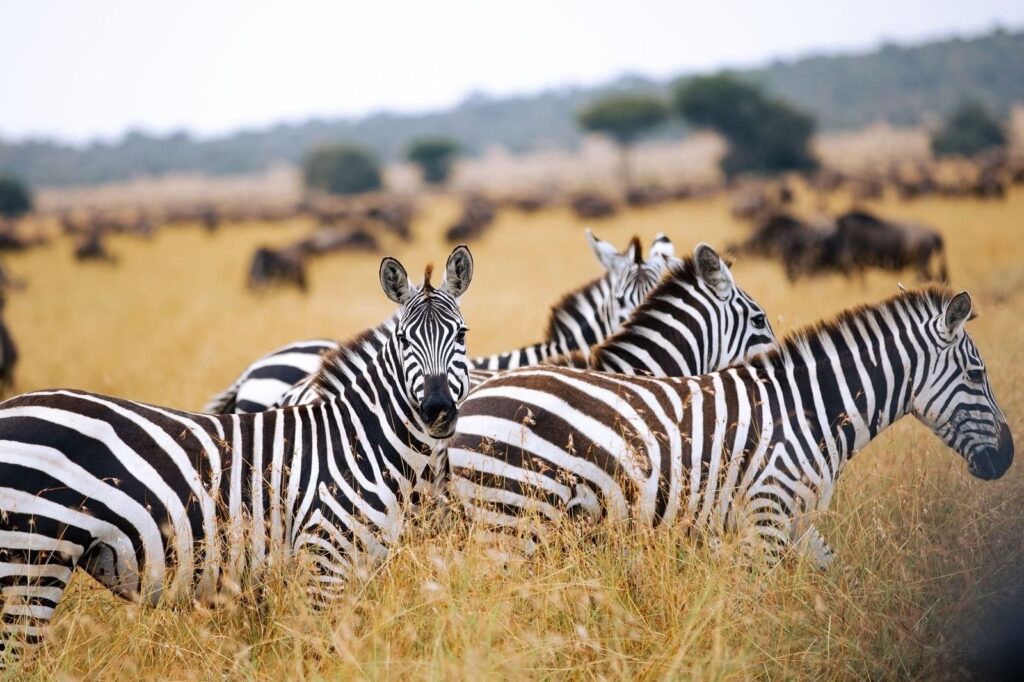
The Great Wildebeest Migration is one of the most famous natural events in the world and one of the main attractions of the Serengeti. Each year, more than a million wildebeest, accompanied by large numbers of zebras and gazelles, move through the Serengeti ecosystem in search of fresh grass and water.
The migration is not a single event that happens on one particular date. It is a continuous natural cycle influenced mainly by rainfall, water availability, and the growth of fresh grass.
Calving Season
From around January to March, large numbers of wildebeest gather on the southern Serengeti plains and surrounding areas. During this period, thousands of calves are born, creating an important feeding opportunity for predators such as lions, cheetahs, hyenas, and other carnivores.
Movement Towards the West
As the season progresses, the herds begin moving north and west in search of fresh grazing. Around April to June, the migration can pass through the central and western Serengeti.
River Crossing Season
Around July to October, some herds reach the northern Serengeti and the Mara River area. River crossings can occur during this period, although their timing and location depend on conditions and cannot be guaranteed.
Return to the Southern Plains
Toward the end of the year, the herds gradually move back toward the southern Serengeti as seasonal rains bring new grass. The cycle then begins again.
Best Time to Visit Serengeti
Serengeti National Park can be visited throughout the year, but different months provide different wildlife experiences.
June to October is generally a popular period for game viewing because vegetation is often lower and animals can be easier to spot. This period also coincides with important stages of the migration in the western and northern Serengeti.
January to March is an excellent period for visiting the southern Serengeti, particularly for travelers interested in the calving season and predator activity.
November to December brings seasonal rains that transform the landscape with fresh green vegetation. This can be a quieter time for travelers while still offering excellent wildlife viewing.
The exact location of the migration changes every year, so safari planning should consider seasonal patterns rather than relying on fixed dates.
Top Things to Do in Serengeti National Park
Game Drives
Game drives are the main way to explore Serengeti National Park. With an experienced safari guide, visitors travel through different habitats in search of wildlife and scenic landscapes.
Game drives can provide opportunities to see lions, leopards, cheetahs, elephants, buffaloes, giraffes, zebras, wildebeests, hippos, hyenas, antelopes, and many other species. Depending on the season and location, visitors may also witness large herds moving during the Great Migration.
Hot Air Balloon Safari
A hot air balloon safari offers a different perspective of Serengeti. Flights usually take place early in the morning, allowing visitors to watch the sunrise while looking across the plains from above.
From the air, it is possible to see wildlife moving across the grasslands, rivers, woodland, kopjes, and expansive landscapes. Balloon flights operate in different parts of the Serengeti depending on the season, including central, western, and southern areas.
The experience is commonly followed by a bush breakfast in the wilderness.
Bird Watching
With more than 500 recorded bird species, Serengeti offers excellent opportunities for bird enthusiasts. Early morning game drives and nature walks are particularly suitable for observing birds when they are most active.
The park’s combination of grasslands, woodlands, wetlands, rivers, and rocky areas provides habitats for a wide variety of bird species.
Guided Nature Walks
Guided nature walks allow visitors to experience the Serengeti from a different perspective. Walking through the wilderness makes it possible to focus on smaller details that can easily be missed during a vehicle-based safari.
Depending on the area and regulations, walks may take visitors through grasslands and other habitats while accompanied by an authorized guide and, where required, an armed ranger. Visitors can learn about plants, animal tracks, insects, birds, and the wider Serengeti ecosystem.
Bush Dinner
A bush dinner offers an opportunity to enjoy a meal in the heart of the Serengeti. The dining area is usually set up in a scenic location surrounded by the sounds and atmosphere of the wilderness.
Depending on the safari camp or lodge, the evening may include a campfire, traditional entertainment, and a multi-course dinner beneath the African sky.
