
Let’s Explore
Ruaha National Park
Ruaha National Park
Ruaha National Park is one of Tanzania’s most remarkable wilderness destinations and the largest national park in the country, covering about 20,226 square kilometres. Located in south-central Tanzania, it forms the heart of the Southern Safari Circuit and is known for its remote landscapes, large elephant herds, impressive predators, ancient baobabs and the Great Ruaha River. The park offers a quieter safari experience, with vast areas of wilderness and fewer vehicles than many of Tanzania’s more frequently visited northern parks.
Ruaha is also special because it sits where the wildlife and vegetation of eastern and southern Africa meet. Its landscapes change from open savannah and rocky hills to baobab-studded plains and extensive miombo woodland. This variety supports an impressive range of animals, including elephants, lions, leopards, cheetahs, wild dogs, buffaloes, giraffes, zebras, greater and lesser kudu, sable and roan antelopes.
Attractions in Ruaha National Park
The Great Ruaha River
The Great Ruaha River is one of the most important features of the park and gives Ruaha its name. The river runs along the southeastern part of the park and provides a vital source of water for wildlife, particularly during the dry season.
As water becomes scarce, elephants, buffaloes, giraffes, antelopes and other animals gather around the remaining pools and riverbanks. Predators such as lions and leopards are also drawn to these areas because of the concentration of prey. Hippos and crocodiles can be seen in suitable sections of the river, while the surrounding trees provide excellent habitats for birds.
Baobab Landscapes
Ruaha is famous for its impressive baobab trees, which are scattered across its plains, hills and woodland areas. These ancient trees give the park a distinctive appearance and create beautiful scenery for photography.
The baobabs are particularly striking during sunrise and sunset when their large trunks and unusual branches stand out against the open landscape. They are also an important part of the ecosystem, providing food and shelter for various animals and birds.
Mwagusi River and Sand Rivers
Ruaha contains several seasonal rivers and sandy riverbeds, including the Mwagusi, Mdonya and Jongomero systems. Although many of these rivers may appear dry during the dry season, water can remain beneath the sand.
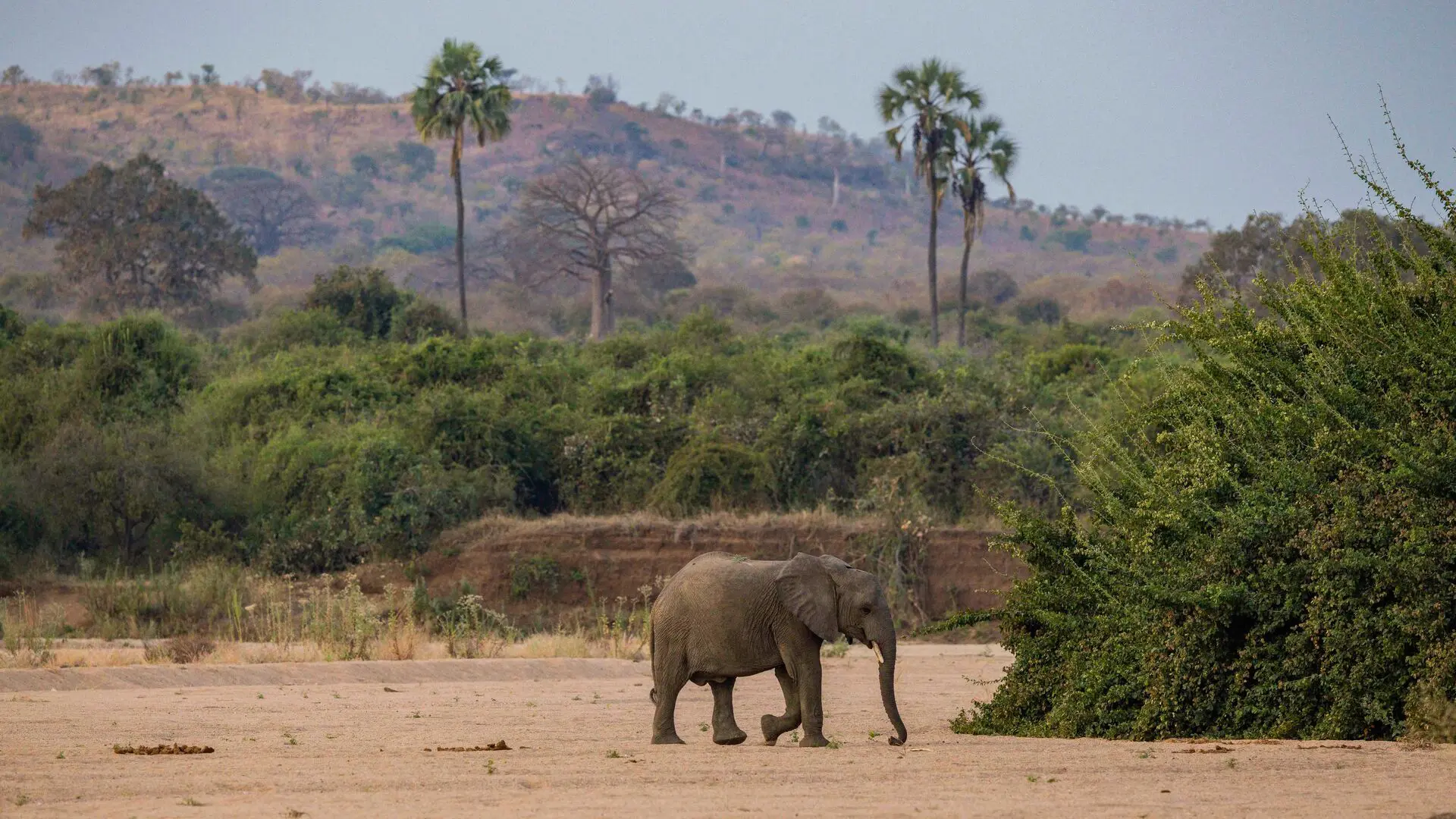
Wildlife uses these river systems as natural movement routes, and elephants are sometimes seen digging into the sand to reach underground water. The vegetation along the riverbeds also provides shade and shelter for animals, making these areas productive locations for game viewing.
Rocky Hills and Kopjes
Rocky hills and granite outcrops rise above parts of the Ruaha landscape, creating attractive viewpoints across the surrounding plains. These areas provide habitats for smaller animals and offer excellent locations for photography and scenic stops.
The combination of rocky terrain, open plains and distant mountains gives Ruaha a very different appearance from the flat grasslands associated with some northern Tanzanian parks.
Miombo Woodlands
Large areas of Ruaha are covered by miombo woodland, which is especially important for species associated with the southern African wildlife zone. The woodland provides food and shelter for animals such as greater kudu, sable and roan antelope.
The mixture of woodland, grassland and river habitats is one of the reasons Ruaha supports such a wide variety of wildlife within one protected area.
Wildlife in Ruaha National Park
Ruaha is particularly famous for its large elephant population. During the dry season, elephants can often be seen moving towards rivers, waterholes and underground water sources. Large herds of buffalo are also common, while giraffes, zebras, impalas, waterbucks, warthogs and other plains animals can be encountered throughout the park.
The park is also an important destination for viewing predators. Lions are frequently seen, while leopards and cheetahs inhabit different parts of the park. Spotted hyenas and African wild dogs add to the impressive variety of carnivores found here.
One of Ruaha’s greatest attractions is the opportunity to see species that are less commonly encountered in other parts of Tanzania. Greater kudu, lesser kudu, sable and roan antelopes are among the special wildlife species associated with the park. This mixture of eastern and southern African wildlife gives Ruaha a character of its own.
Birdlife in Ruaha National Park
Ruaha is an excellent destination for bird watching, with more than 570 bird species recorded. The combination of rivers, woodland, grassland, rocky areas and seasonal wetlands provides habitats for a wide range of birds.
Visitors may encounter colourful bee-eaters, rollers, kingfishers, hornbills and many species of birds of prey. The riverine areas are especially productive for bird watching, while the woodland provides opportunities to see species that are less common in open savannah environments.
Bird watching is particularly rewarding during the wetter months when the landscape becomes greener and migratory birds are present.
Top Things to Do in Ruaha National Park
Game Drives
Game drives are the main way to explore Ruaha National Park. The extensive road network allows visitors to explore different habitats, from the Great Ruaha River and seasonal sand rivers to open plains, rocky areas and miombo woodland.
Early morning and late afternoon drives are especially rewarding because wildlife is generally more active during the cooler parts of the day. During the dry season, the areas around water sources can provide excellent opportunities for observing elephants, buffaloes, predators and other wildlife.
Guided Walking Safaris
Walking safaris provide a more personal way to experience Ruaha’s wilderness. Accompanied by an authorized guide and, where required, a ranger, visitors can explore the landscape on foot while learning about animal tracks, plants, insects, birds and smaller wildlife.
Walking also gives visitors an opportunity to appreciate details that are often missed during a vehicle safari, such as tracks in the sand, animal calls and different types of vegetation.
Bird Watching
With its impressive variety of habitats and more than 570 recorded bird species, Ruaha is a rewarding destination for bird lovers. Bird watching can be combined with game drives or guided walks.
The Great Ruaha River and seasonal riverbeds are particularly interesting because they attract waterbirds and other species, while the woodland areas provide opportunities to observe raptors, hornbills, bee-eaters and many other birds.
Photographic Safaris
Ruaha’s wide landscapes, wildlife and distinctive baobab trees create excellent opportunities for photography. Elephants walking across dry riverbeds, lions resting beneath trees and giraffes moving through open woodland are among the scenes that can make memorable photographs.
The park’s relatively quiet character can also provide photographers with more time and space to observe wildlife without the heavy vehicle concentration sometimes experienced in busier safari destinations.
Sundowners and Bush Meals
Some safari camps and lodges arrange special outdoor experiences such as sundowners and bush meals in designated areas. Watching the changing colours of the landscape as the sun sets over the baobabs and distant hills can be a memorable part of a Ruaha safari.
These experiences also provide an opportunity to enjoy the surroundings away from the regular safari vehicle routine.
Stargazing
Ruaha’s remote setting and limited development make it an attractive place for observing the night sky. Away from major towns and city lights, the skies can be remarkably clear on suitable nights.
Stargazing can be enjoyed as part of a camp or lodge experience, allowing visitors to appreciate a completely different side of the park after sunset.
Best Time to Visit Ruaha National Park
The dry season from June to October is generally considered an excellent time for wildlife viewing. As water becomes limited, animals gather around the Great Ruaha River, seasonal water sources and other remaining pools. Vegetation is also less dense, making wildlife easier to spot.
The months from August to October can be particularly rewarding for game viewing because water sources become increasingly important to wildlife. This period is also suitable for visitors who want to focus on elephants, predators and general wildlife photography.
The wetter season from November to May transforms the landscape with fresh vegetation and greener scenery. This is a good period for bird watching, photography and enjoying the park when it is at its most lush. Migratory birds are also present during part of this period.
How to Get to Ruaha National Park
By Road
Ruaha can be reached by road from several destinations in southern and central Tanzania. The journey can be combined with other Southern Circuit destinations, including Nyerere National Park and Mikumi National Park.
Road travel takes longer than travelling by air, but it allows visitors to experience the changing landscapes of Tanzania and can be suitable for travellers planning a longer southern safari.
By Air
Flying is one of the most convenient ways to reach Ruaha, particularly for visitors travelling from Dar es Salaam, Arusha, Zanzibar or other safari destinations. The park has airstrips serving different areas, including Msembe and Jongomero.
Charter and scheduled domestic flights can make it easier to combine Ruaha with other destinations without spending long hours on the road.
Where to Stay in Ruaha National Park
Accommodation in and around Ruaha includes safari lodges, tented camps and campsites. Staying inside or close to the park allows visitors to spend more time exploring the wilderness and makes it easier to enjoy early morning and late afternoon game drives.
Many camps are located near rivers, seasonal watercourses or scenic areas, providing opportunities to experience the surrounding environment even when you are not on a game drive.
Why Visit Ruaha National Park?
Ruaha National Park offers a different side of Tanzania’s safari experience. Its vast wilderness, ancient baobabs, large elephant herds, powerful predators and unusual antelope species make it an outstanding destination for travellers looking for a deeper connection with nature.
The Great Ruaha River, diverse habitats and relatively remote setting give the park a strong sense of wilderness. Whether you are interested in wildlife, photography, bird watching, walking safaris or simply experiencing a quieter safari environment, Ruaha provides an opportunity to explore one of Tanzania’s most distinctive natural landscapes.
