
Let’s Explore
Usambara Mountains
Usambara Mountains
The Usambara Mountains are a beautiful mountain range in northeastern Tanzania, known for their green landscapes, forests, farmland, valleys, and rich biodiversity. They form part of the Eastern Arc Mountains, an ancient chain of mountains that stretches across Tanzania and Kenya.
Unlike Tanzania’s volcanic mountains such as Kilimanjaro and Meru, the Usambara Mountains are much older and are mainly made up of ancient crystalline rocks. The mountains are especially popular with travellers interested in hiking, nature, birdwatching, culture, and rural experiences.
Location
The Usambara Mountains are located in Tanga Region, in northeastern Tanzania. The range is divided into two main areas: the West Usambara Mountains and the East Usambara Mountains.
The town of Lushoto is the main gateway to the West Usambaras and is commonly used as a base for exploring the mountains. The East Usambaras are located closer to the coastal side of the range and are particularly important for their forests and biodiversity.
West Usambara Mountains
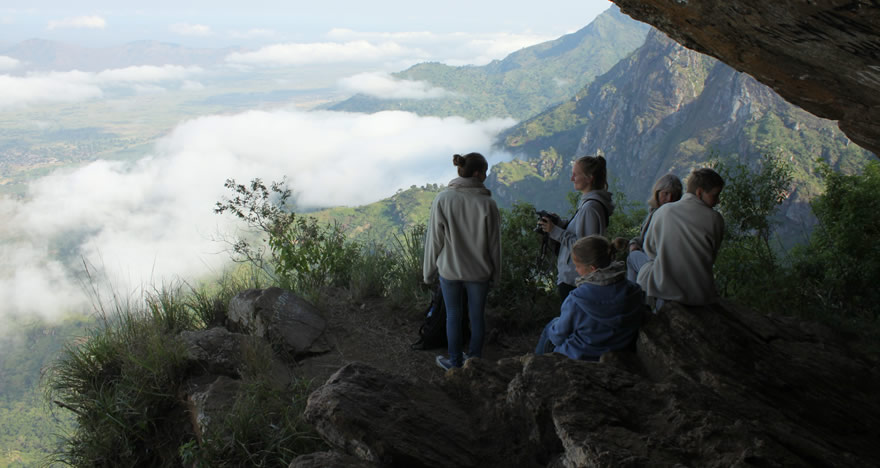
The West Usambara Mountains are known for their scenic hills, viewpoints, villages, farms, and hiking trails. Lushoto is the main centre for tourism in this part of the range.
Popular activities include walking through villages, visiting viewpoints, exploring forests, and hiking between rural communities. The area offers a cooler climate than the surrounding lowlands, making it a pleasant destination for walking and outdoor activities.
One of the well-known viewpoints is Irente Viewpoint, which provides impressive views across the surrounding plains. Other attractions include Magamba Forest, Mtae, and various waterfalls and traditional villages.
East Usambara Mountains
The East Usambara Mountains are particularly important for nature and conservation. They contain some of Tanzania’s remaining montane forests and support many plant and animal species found nowhere else in the world.
The Amani Nature Reserve is one of the main attractions in this area. Visitors can explore forest trails, observe birds and butterflies, and learn about the unique plants and ecosystems of the Eastern Arc Mountains.
Wildlife and Biodiversity
The Usambara Mountains are famous for their exceptional biodiversity. The forests provide habitats for numerous species of birds, reptiles, amphibians, butterflies, and plants.
Some species are endemic, meaning they naturally occur only in this region or a very limited area. This makes the Usambaras scientifically and environmentally important.
The mountains are especially interesting for birdwatchers, with opportunities to see different forest bird species along the hiking trails.
Hiking in the Usambara Mountains
Hiking is one of the best ways to experience the Usambara Mountains. Unlike a high-altitude summit climb, hiking here usually involves walking through forests, farms, villages, valleys, and mountain ridges.
Routes can range from short walks to multi-day treks between villages. A local guide is recommended because guides can help visitors follow the trails, understand the local environment, and learn about the communities and culture along the way.
Climate
The Usambara Mountains have a cooler and generally more humid climate than the surrounding lowlands because of their elevation. Temperatures can vary depending on altitude, season, and location.
Rainfall supports the forests and agriculture, particularly in the wetter parts of the mountains. Visitors should therefore be prepared for changing weather, especially when hiking through forested areas.
People and Culture
The Usambara Mountains are home to rural communities whose livelihoods are closely connected to agriculture. Farms and gardens can be seen across many parts of the landscape, producing crops such as vegetables, bananas, tea, and other food crops.
A visit to the Usambaras provides an opportunity to experience local village life, traditional farming, markets, and community-based tourism. Travellers can also learn how people have adapted their livelihoods to the steep mountain terrain.
Best Time to Visit
The Usambara Mountains can be visited throughout the year, but the drier months are generally more convenient for hiking. The main dry periods are usually around June to October and January to February.
The rainy seasons can make hiking trails muddy and slippery, but they also bring fresh vegetation and lush forest scenery. Weather conditions can vary within the mountains, so visitors should carry suitable clothing and rain protection.
Why Visit the Usambara Mountains?
The Usambara Mountains offer a different experience from Tanzania’s famous high-altitude climbs. Instead of focusing on reaching a single summit, visitors can explore forests, viewpoints, villages, farms, waterfalls, and mountain trails at a more relaxed pace.
For travellers looking to experience Tanzania beyond traditional wildlife safaris, the Usambara Mountains provide an opportunity to combine nature, hiking, biodiversity, scenery, and local culture in one destination.
