
Let’s Explore
Mount Meru
Mount Meru
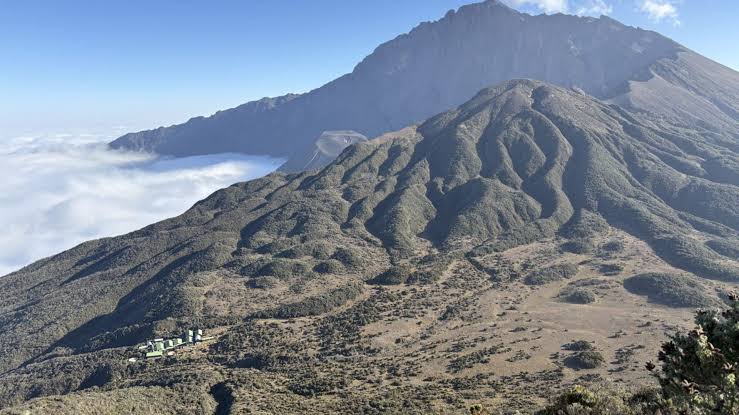
Mount Meru is one of Tanzania’s most impressive mountains and the second-highest mountain in the country after Mount Kilimanjaro. It rises to 4,566 metres (14,980 feet) above sea level and is located inside Arusha National Park, about 70 kilometres from Mount Kilimanjaro.
Although it is lower than Kilimanjaro, Mount Meru offers a challenging and rewarding mountain experience. The climb passes through forests, open grasslands, rocky slopes, and high-altitude landscapes, giving hikers the opportunity to experience several different environments during one trek.
Where Is Mount Meru?
Mount Meru is located in northern Tanzania, close to the city of Arusha. The mountain forms an important part of Arusha National Park and can be seen from many areas around Arusha on clear days.
Its location makes it convenient to combine a Mount Meru trek with a wildlife safari or a climb of Mount Kilimanjaro.
Mount Meru Landscape
When choosing a Kilimanjaro route, consider more than just the number of days or the price. Think about how much time you have, your hiking experience, your preferred scenery, your comfort with camping or mountain huts, and how much time you want to spend acclimatizing.
For many first-time climbers, routes with longer itineraries provide a more gradual ascent and more time to adjust to the altitude. Whichever route you choose, proper preparation, a suitable itinerary, and responsible altitude management are important parts of a successful Kilimanjaro climb.
Socialist Peak
The highest point of Mount Meru is called Socialist Peak, standing at 4,566 metres. Climbers normally begin the summit attempt very early in the morning.
From the summit area, hikers can enjoy impressive views of the surrounding landscape and, when weather conditions are clear, Mount Kilimanjaro in the distance.
Wildlife on Mount Meru
One of the special features of climbing Mount Meru is the possibility of seeing wildlife along the lower sections of the mountain. The surrounding area is home to animals such as:
- Giraffes
- Buffaloes
- Elephants
- Warthogs
- Antelopes
- Monkeys
- Various bird species
Because Mount Meru is within Arusha National Park, hikers are accompanied by an armed ranger on the lower sections of the route. This is an important safety requirement because wildlife can be encountered in the park.
Mount Meru Climbing Route
The main climbing route is the Momella Route. The trek usually takes about 3 to 4 days, depending on the itinerary and acclimatization plan.
A typical climb includes:
Momella Gate → Miriakamba Hut → Saddle Hut → Socialist Peak → descent
The trail gradually becomes steeper as it approaches the summit. The section between Saddle Hut and the summit is particularly challenging because of the steep terrain and high altitude.
Best Time to Climb Mount Meru
Mount Meru can be climbed throughout the year, but the dry seasons are generally the best time for trekking. The main dry periods are June to October and December to February. During these months, the trails are usually drier, making hiking more comfortable, while clearer skies can provide beautiful views of the surrounding landscape and Mount Kilimanjaro.
The period from June to October is particularly suitable for climbing because of the generally dry and cooler conditions. December to February is another favourable period, with relatively warm temperatures and good visibility. These months are also suitable for travellers who want to combine a Mount Meru climb with a safari or a Kilimanjaro adventure.
Mount Meru also receives rainfall during March to May and again in November. The long rains from March to May can make the trails wet and slippery, while November brings shorter rains that may occur intermittently. Climbing is still possible during these periods, but hikers should be prepared for changing weather and wetter trail conditions.
